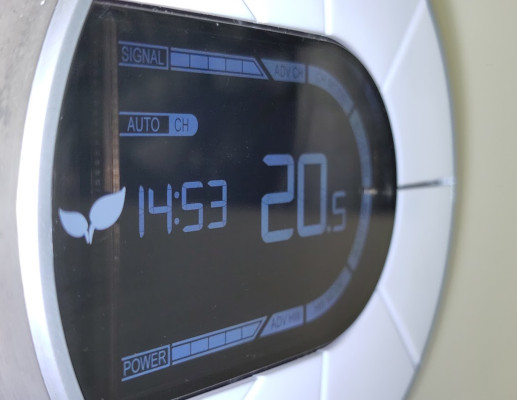
Many homes still rely on a single thermostat to control the entire home heating*. This is usually installed in the hall or another room that is generally the first to feel the chill and last one to heat up.
The idea is that when the temperature in that room gets to the ‘cut-off’ point, the central heating pump is told to stop circulating the water and that, in turn, tells the boiler to stop heating the water (unless the hot water still needs heating, then there’s a valve that redirects all the boiler’s heat into the water tank rather than splitting some off for the radiators).
Either way, the thermostat is a simple on/off device and the central heating is either being fed hot water or it isn’t: cranking the thermostat up a few degrees because you’ve just got in and want the house to warm up faster won’t work – it’ll just increase the temperature the hall needs to get to before the heating side of the boiler is shut off! If you’re like us, you’d probably forget to adjust it down again later anyway – so the end result is a far bigger bill than you should get.
If you find yourself constantly adjusting the thermostat because other rooms are cold is a sign there’s something deeper at play: maybe those rooms need the radiator to be fed more of the total share of the warmth; the pump isn’t running fast enough; there’s blockages in the pipes – or perhaps you’re simply expecting too much from a system that’s struggling to meet the needs of the home. We’ll cover these kinds of things elsewhere because they’re projects rather than quick hints.
*Some thermostats are sold as ‘smart’ because they can turn the heating on early if it’s especially cold or they are connected an app on your phone, etc. so you can control things from afar. A few can also turn the heating off early if it senses the room is warm enough to last until the ‘off’ period comes next. However, most can’t do anything to make other rooms heat up any faster or only heat certain areas of the home – for that, you’d need to turn to a much smarter system.