Fridges and freezers are powered all day, all year round so it makes sense to do what you can to reduce the amount of energy they consume.
Check the door seals are in good order: they’re generally a flexible magnetic plastic and rely on a smooth surface to ‘stick’ to. Keep the temperatures set to a sensible level in the fridge (you generally want the insides to be around 5oC. If things in the salad drawer have ice on them, it’s too cold) and the freezer at -18oC or so. Obviously, try not to pull the door open and then stand there while you finish up that conversation with a friend: the longer the door is open, the more energy it’ll take to get the inside temperature back down. If the freezer is full of ice, it’ll pay off to defrost it: too much and it reduces the efficiency of the machine, way too much and you might find the ice is preventing the door from sealing shut properly.
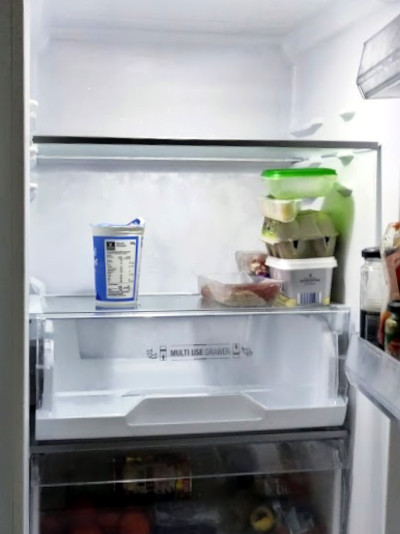
There’s also a thing called thermal mass. Without going into the science behind it too much, here’s the bottom line: the denser something is (its mass) the longer it’ll take to change temperature. If you have an empty fridge then the pump needs to come on more often because the air (low density so a low mass) warms up when you open the door. If your fridge is chock-full of things like food, juices, etc., then opening the door won’t have such an impact on the internal temperature because the denser items take longer to change their temperature.
If you often have an empty shelf in the fridge then fill the gaps up with tinned beans, soups or anything else that you have going spare. Same thing with the freezer (either a stand alone one or combined fridge/freezer): if you have lots of empty space in it, throw in a few litre bottles of milk or something. If anyone asks, tell them you’re thinking about your thermal mass. They might think you’ve joined WeightWatchers but who cares? You’re saving energy and lowering the bills!