
The water in a central heating system works in a closed loop: the water moves between the radiators and boiler but isn’t changed for fresh each time – it’s the concept as the cooling water in a car. As with a car, there’s a header tank that allows the system to be topped up (if, say, a radiator is drained then more water has to be added to the system).
Why should we flush the system?
Again, like a car, this water has additives in it to both improve its ability to function and to reduce scale and other build-ups. Fairly obviously, these additions lose function over time – and there’s also a slow build up of rust particles and other bits that all reduce the efficiency of a system.
If you want to see what the water in the system looks like, try and let the water run into your cloth for a shot while: chances are, what comes out will be brown rather than clear – if you really want a shock, try draining a radiator and seeing the filth that is sitting in the bottom pipe!
Once every few years (generally, about every 5-8) it’s well worth draining the whole system, flushing it through to wash out the loose bits and refilling it with fresh water and new additive. This is done by opening one of the drain cocks that your system should have at the lowest point in the central heating pipe-work.
How to flush the system
Before you start, be aware that if your boiler is heating your hot water too (most are) then this will stop that happening until you restore the service – so resist the urge to start until everyone’s showered and dressed! Of course, the water used in the central heating isn’t the same water that’s in the hot water tank: the household hot water is heated by passing boiler-heated water through a coiled pipe inside the body of the hot water tank – but we’re about to drain that coil.
A week or do before draining the system, add a flushing agent to the header tank. This will get carried around the system by the pump and help to break down the particles of solid matter that will have built-up in the system, making them far more likely to get flushed out. Obviously, if you simply tip a litre of flushing agent into the header, it won’t mix in – so the way we do it is like this:
- Shut the power off to the pump/heating system
- Stop fresh water from refilling the header tank (either close the in-line valve or block the ballcock from allowing the tank to refill – a bit of wood with a string attached works perfectly well)
- Tricky, this bit: while keeping an eye on the header tank, open one of the drain cocks (you’ll need one when you drain the whole system next week so now is a good time to check they work!) and run off enough water to bring the header tank level down until it’s almost sucking in air. Add the flushing chemical to the header tank and run off more water until the tank is, again, almost sucking air. At this point, close off the drain valve and allow the system to refill with fresh. The aim here is to get as much of the additive to enter the system as possible without the complication of introducing an air-lock
- Restore power and allow the system to run pretty much as normal for a week
When you’re ready to do the real drain-off, you’ll already know what the process is going to look like but there’s some extra steps to take care of:
- Make sure all the radiators have their valves open (TRV’s on max) and the system is set to provide water to both the radiators and hot water tank (wind the thermostat up and adjust the hot water tank thermostat if you need to)
- Power off the heating system
- Stop header tank refilling
- Open drain cock, allow water to drain to safe place
- Once the flow looks like it’s slowing, starting with the top floors, open the air bleeds on all the radiators so each panel will drain out
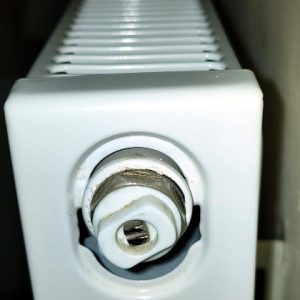
Once the system is as empty as possible, it’s time to flush it.
- Do NOT forget to close the radiator bleeds before you allow fresh water into the header tank – it’s a little embarrassing to find out that you’ve been merrily washing a bedroom carpet…
- Fill the system with fresh water and drain that off again. You can have a ‘power flush’ done which forces water under pressure through each radiator in turn – obviously, this is a more involved and time consuming extra step that’ll need a plumber with the right kit; it’s your choice to decide if it’s worth doing
- Turn the power off
- Block header tank from refilling and repeat the drain-off process with the flushing water. A purist might, at this point, try to clean the header tank of any loose sediment
- Now we’re ready for the real refill. Close off the drain valve(s), close all the radiator bleeds and pour the additive into the header tank. In a typical three bed, it’ll probably be one bottle but you’ll have checked the quantity you need before you started, won’t you?
- Allow fresh to enter the header. Ideally, take this slowly to reduce the chance of air-locking
- Bleed all the radiators. You might find there’s an air bleed point near the pump, too.
- Once you’re happy the system is as free from air as possible, bring the power back on and, if you can, bring the pump online with the system in ‘hot water’ mode for a few minutes without the boiler running to flush air from the boiler itself. Again, you might not be able to do this; there’s a small risk of getting an airlock in the boiler if you can’t – which may cause the boiler to go into shutdown and need a reset once the air has been pushed out of the boiler’s heat exchanger. If you have to start with the boiler on, then do a few minutes of hot water only to start with
- Switch to hot water & central heating mode and go around all the radiators / air bleed points again to check for any new air blocks.
- Readjust the hot water tank thermostat if you moved it earlier
- Finally, reset the TRV’s or valves on the radiators and check the room thermostat if you adjusted it earlier