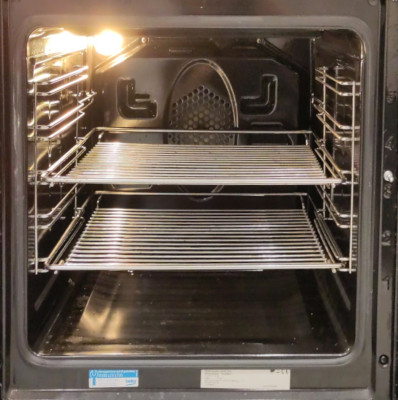
Sooner or later, someone will turn the oven one and it’ll trip the circuit breaker or simply fail to warm up. If the breaker goes, try resetting it and checking if other oven functions still work (lights, etc). If they do, it’s almost certain that the heating element has blown.
Replacement elements are widely available and places like will almost certainly have one that fits your oven. They also have videos that detail the process so watch one that most closely fits your unit.
Things to watch out for
Once you start taking internal panels off ovens, be very careful of sharp edges. Because the power is off you’ll have no oven light to guide you. Plus, the inside of an oven is a confined space so a lot of the work is done more by feel than by sight and things like the fan blades, fan cover plate and so on have some evil edges.
For reasons we’ve never understood, oven elements always fail the week before the oven was due to be cleaned. Lay some newspaper down so you have somewhere you can put the screws and other greasy bits.
Before you fit the new element, check the fan spins easily. If it’s at all sluggish or ‘sticky’ then it’s probably wise to order a new assembly and fit that, too: a slow or stuck fan usually causes the element to overheat and fail.
In most ovens, the two wires that clip into the spade connectors of the element will come through a hole towards the rear of the oven (i.e. further towards the wall). If there’s any chance of these falling back into that hole and going out of reach, tie a length of string to them before disconnecting the old element otherwise you’ll be taking the oven’s back off as well – a much bigger job! Once they’re safely clipped into the new element, remove the string.
In all, replacing a failed element isn’t a complicated job. It’s just awkward!