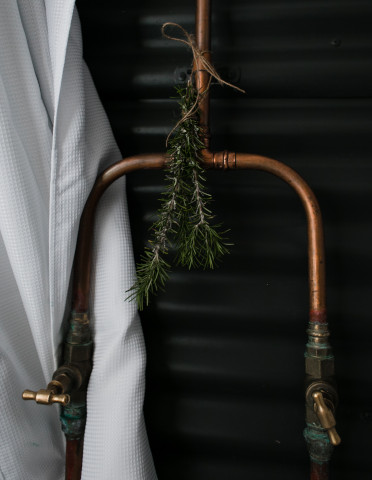
Not so much a project in its own right but something that, one day, may well come in handy to know!
When installing or moving a radiator, there’s a good chance the pipework won’t be in exactly the right place and might need extending or just moving.
In this example, we’ll have two horizontal pipes running from the central heating that are too low and too far apart for the new radiator. They’re the standard 22mm copper (microbore piping is easier to bend by hand around a suitable former – a can, for example – and we don’t need as much hardware).
We want to fit a pair of valves to the existing pipe ends then bring a new pipe off before bending it straight up to meet the new, bottom fed, towel rail we have already got lined up for the job.
Aside from the physical mounting of the new radiator, the only thing that’s new to the average DIY’er will be the pipes: how on earth do we get two clean and equal bends in copper pipe? The answer is to use one of two tools: a pipe spring or a pipe bender, both available in versions for the common pipe sizes.
The job of these tools is to allow the pipe to take on a curve without deforming in diameter: take a bit of garden hose and bend it and you’ll notice that the pipe tends to flatten as it bends, forming an oval. Not only is this a restriction in the pipe, it doesn’t look great!
Copper does the same (and in tighter curves, starts to buckle). Using a spring or ‘bender supports the walls of the pipe and stops this collapse.
Spring pipe bender
To use the spring – ideal for gentle bends – cut off the right length of pipe (leave a little excess) and, using the right diameter spring, slide it into the bore of the pipe so the main length of the spring is centred on the point you want the bend to be. Obviously, it makes sense to tie a strong line to the eye in the end of the spring in order to help pull it out later.
Now, gently apply the bending force to the pipe. Use a former (a curved object) to help guide the bend at the right place and pull slightly past the angle you want because the pipe will spring back a fraction. Once you have the right bend set, grab hold of your line and extract the spring gently. Now you’re all set to cut the pipe to the exact length.
Pipe bending jig
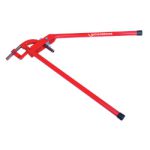
To use a bending jig, first make sure you have the right size guides: 22 or 15mm are the two common sizes of pipe. Mark the point where you want to bend the pipe and get that set at the start of the bending point in the tool. Slide the guide in over the top and, as with the spring, use steady firm pressure to set the bend. Once you’re done, simply relax the pressure on the arms and the guide should slip free. Job done!
A pipe bender can reliably throw a bend right down to the pipe’s minimum bend radius – not something you really want to try with a spring.
A little practice on some scrap pipe is a good idea before you try bending an expensive piece of chrome-plated show pipe but the task isn’t anything like as scary as it looks.
For the die-hards, it’s also possible to use sand to stop the pipe walls deforming: simply pack sand into the pipe and bend as for spring bending. We’ve not tried it because springs make less mess than handfuls of loose sand but it’s always good to know of an alternative should the need arise!
If you only have a couple of bends to throw, you might be able to rent a pipe bender: the cheap ones are usually not that great (but might work fine if you’re careful) while the ones that get rented out tend to be more robust with better actions.
Good luck and have a go!