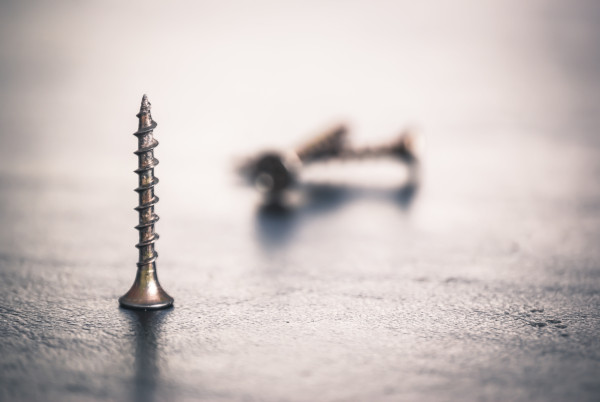
Not strictly an eco tip but one that any DIY-er will have to cope with at some point: a screw that no longer holds in the wood it’s meant to be onto. For example, a door hinge that’s been taken off one too many times and one of the screws no longer ‘works’. This adds extra stress on the remaining screws and the temptation is to over-tighten those ones to compensate – and the end result is that more screws will soon start failing, too.
The cure is as simple as this: take a matchstick. Compare it to the length of the screw and break off enough so that, when pushed in to the screw’s hole, it’s just below the surface (obviously, we’re discarding the ‘live’ end of the match in this process!). If that’s not enough to help the screw ‘grip’ again, it may need a second match. Once done, the screw now has new material to cut a thread into and, in doing so, forces the match-wood into the old grooves.
No matches? A rolled up strip of paper will do just as well.
Back in the day – before plastic expanding plugs were the ‘go to’ for masonry fixtures, the way people did it was to drill an oversize hole, fill it with a wooden splint and then drive a woodscrew into that ‘plug’. Exactly the same principle: fill the hole with a material that the screw can drive into and the shank of the screw will force the material outwards, gripping the walls of the hole. There are no new tricks: we’re all simply rediscovering things our fore-fathers did and just think we’re the first to think of it!