Kinds of panel
Generally speaking there’s two ways to use solar energy: to provide heat or to provide electrical power. Heat is obvious: the sun’s rays warm things up so if we optimise the collection of that energy, transfer it into something else then we’ve got solar heating. Generating electricity involves converting the sun’s light rather than the sun’s heat but the focusing and transfer of the energy still has to be done.
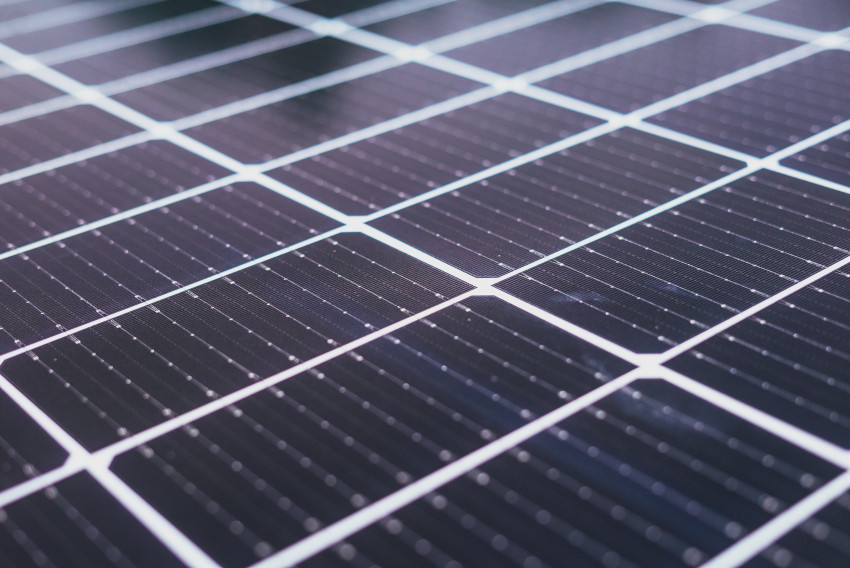
A single panel is typically around 1m x 1.6m, depending on its function and manufacturer. They’re generally black – for water heating, this maximises the heat absorption – or a metallic purple (a result of the composition of the cells in an electric system) and will have an aluminium frame for mounting. In domestic settings, they are usually installed in multiple units up on a roof; not only does this keep the fairly fragile panel out of harms way, it maximises the exposure to sunlight.
Solar heating
Heat generated from the sun’s energy is generally used to warm the water in the storage tank but rather than circulate the water directly from the tank up into the panel and then back down into the tank, an intermediate stage is used – in the same way the water circulating from a gas boiler and into the hot water tank and household radiators is a ‘closed loop’.
A fluid is fed into a radiator-like matrix in the panel itself and heated by the sun. It then returns, transfers its warmth into the water tank using another heat-exchanging matrix and then cycles back into the panel.

This diagram shows a tank with two heat exchangers (coils); the lower one is used by the solar heated water, the upper one by a traditional gas boiler. The electric immersion heater is towards the top of the tank and the hot water is drawn from the very top connection.
Just as hot air rises, do does hot water and if you were to ‘heat map’ a tank of stored hot water, there’d be a temperature gradient within the tank and the coolest water would be at the bottom. It makes sense, therefore, to introduce the free heat energy we’re generating to the bottom of the tank, with the aim of warming up as much of the contents as possible. Should we need a boost when the sun’s rays aren’t enough to do the job on its own, we can use an electric immersion heater or other form of water heating system (gas boiler for example) – but for these modes it’s normal to introduce the heating higher up the hot water tank, typically half way (water-sourced heat) or top third (immersion) because we don’t really want to heat the whole tank using an expensive energy resource.
Obviously, solar heating only works when the sun is visible (and its light and heat is fairly constant). Relying on it to provide a full tank of hot water first thing in the morning would be a tall order unless the tank is exceptionally well insulated and we were able to maximise our gains on the previous day. Equally, if the tank is already at optimum temperature, there’s not much we can do with the excess heat. For these reasons, solar water heating is generally used to pre-heat the water and so reduce our main energy consumption rather than treating it as ‘the’ source to provide all the hot water.
Solar electricity
A single solar cell doesn’t produce a great deal of energy so they’re arranged in columns and rows and, ultimately, into a panel. If you look closely at a single panel you can see the array of cells in the matrix and the silvery lines that connect them together. Multiple panels are then used in an array.
A set of Photovoltaic – PV for short – panels can produce rather usable quantities of electrical power. There’s a slight inconvenience to how this power is delivered though: by virtue of the chemical process, it is a Direct Current (DC) rather than the Alternating Current (AC) that we need in the plug sockets around the house. It’s also far too low a voltage to be usable and, to make matters worse, the level of available current will vary with the brightness of the sunshine (amongst other factors that we will cover later). To correct these issues, an electrical device called an Inverter is deployed; it’s job is to change the rather unpredictable DC into a regulated and useful 240V AC that we can use in the home.
One immediate benefit of generating electricity rather than simply hot water is that it’s a form of energy we can use for a number of things – and that’s why PV arrays outnumber solar heating arrays by a huge margin: electricity is, quite simply, a more useful product for most people.
Unlike the solar heating panels, we can make use of any ‘spare’ electricity that we’re not using in the home and, later on, we’ll look at technology like solar batteries and explore the idea of selling power back to the grid.