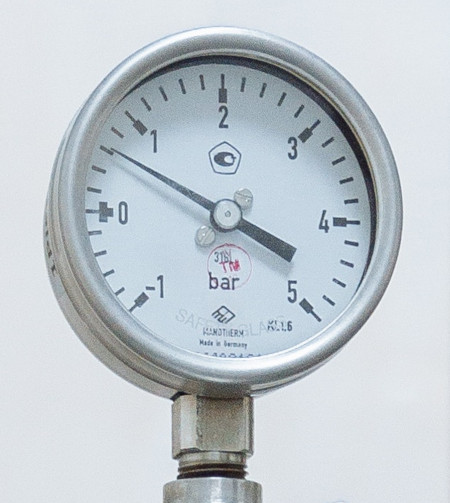
In an uncovered pan, water boils at about 100oC. If a lid is sealed onto the pot, as the temperature rises, so does the pressure. The water can’t ‘boil’ (give off spare energy as bubbles) at the normal point because the pressure in the pot stops the bubbles from forming – and so the temperature keeps rising. Of course, if we didn’t do anything about this then at some point the pot would explode – and a pressure cooker is simply a sealed pot that has a release valve fitted (there’s usually two of them) that stops the pressure from getting dangerously high.
Because the water is now able to exceed 100oC, things cook at a higher temperature and this means they generally cook faster: typically, boiling potato will take 5-8 minutes rather than 10-12 so it’s obvious that a pressure cooker can save us money: it’ll take slightly longer to bring something to a working temp of 115oC than 100oC but not significantly longer because the pressure will build quite rapidly – but the heat is then lowered to about the same level as we use to simmer something anyway. End result: less energy.
A pressure cooker really comes into its own when dealing with cheaper cuts of meat because the increase in heat and pressure will tenderise the food – it’s ideal for cooking stewing or braising steak.
Some important points:
- Pressure cookers work by building up steam so it makes sense that we need to have a liquid in the pot. It doesn’t have to be water (wine is used in some recipes) but the important thing to note is that pot mustn’t run dry. Of course, we can’t check this during cooking without releasing the pressure and taking the lid off, so always make sure there’s enough water to start with. Because of the way it works less water vapour escapes during the cooking process and more of what you added at the start will remain at the end (so you might need to simmer something, lid off, if you need to reduce a stock).
- Once the pot has come up to temperature, reduce the heat to a level that keeps the pressure stable – all pots will have some kind of device that allows you to ‘see’ the pressure in the pot; it could be a simple bar with stripes or something all together more complex but they all serve the same purpose. Leaving the heat up too high will force the pot to over-pressure and it’ll vent the excess via its safety valve. On a good day, this will ‘only’ waste energy and boil off some of the water – in the worst case it’ll run out of liquid, overheat and that’ll cause the over temperature valve to melt. This author has never seen that happen and can only imagine the mess it’d make of the food, the cooker and, quite possibly, the ceiling above the pot!
- There’s two ways to cool a pot: turn the heat off and allow it to cool (the food will carry on cooking for as long as that takes) or stand it in the sink and run cold water around it. On some pots, it’s possible to lift the pressure valve body to reduce the steam pressure – but only use this method if it’s explained in the handbook how to go about it safely: Releasing the pressure in a hurry causes the liquid, now not under pressure but over 100oC) to bubble furiously and that can cause food items to rise up, sometimes blocking the release hole. If nothing else, having a jet of superheated steam fired directly at your fingers is generally a bad idea!
- Before using the pot always check that the seal, the safety valve and so on are in good order. If in doubt, don’t use it and have it checked or replaced. Most manufacturers will state ‘replace the seals every…’ and a period of time (usually several years) and it should be possible to buy new seals, valves, etc. online.
There’s loads of pressure cooker ideas online; the BBC Good Food site is a good place to start so give it a go – you’ll be glad you did!