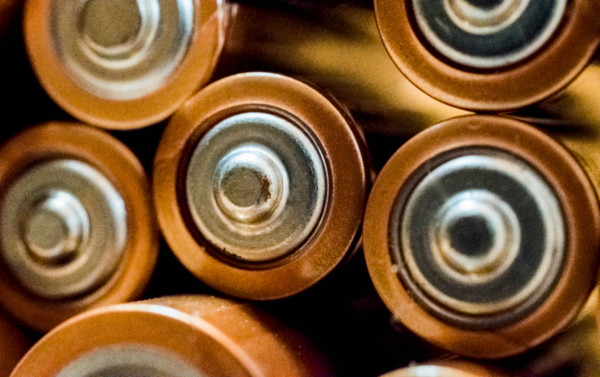
If you have a battery that’s gone flat, put it under your armpit and then try it again. It’ll work for a bit longer.
Granny
Firstly, we have to assume Granny is talking about batteries from torches and so on – not the big one under the bonnet of her Morris Minor! Secondly, we’re not too sure about even wanting to test this one out….but in for a Penny, in for a Pound. Before we roll up our sleeves, so to speak, let’s see if there’s any science behind it.
Batteries are made up of a mix of chemicals that react to produce electrons. When wires connect them into an electrical circuit, electrons from this process flow down the cables and we get power to light up the torch, use the phone or start a car. Obviously, there’s only so much space for the chemicals in a battery so, eventually, this process starts to run out of ‘raw material’ and the torch starts to dim because the supply of electrons can’t keep up with the bulb’s demand.
However, chemical reactions generally happen more quickly in warm conditions – and in a battery that should mean that it can produce spare electrons at a faster rate if it’s warm – so Granny might be onto something here!
We’ve tested this idea with standard AA cells: the kind used to power a wall clock. We put a couple of fresh cells into a torch and left the light on until it was very noticeably dimmer, pulled the batteries out and warmed them up on a heat plate (sorry Granny, we had to draw the line somewhere: our armpits are sacred!). Once they were at a nice 40oC, we quickly popped them back into the torch. Hey presto, a brighter light again! As the cells cooled, the light started to dim down again but if we were stuck in a church crypt it might have bought us enough time to find the exit.
Two things were happening in our test AA batteries: Firstly, just by giving the cells a rest, the unprocessed chemicals had a little time to ‘regroup’ so to speak. This would give the battery a short burst of life anyway – but by warming to cells up the battery could convert any remaining chemical energy to electrical energy that much faster and deliver electrons quickly enough to keep our bulb shining.
As a side note, lots of modern batteries don’t like heat at all and can react violently (like, by exploding) if they get too warm. Don’t put batteries in hot places. Not ever. We did this experiment so you don’t have to – and we were very careful to select the kind of battery that we KNOW is tolerant to mild warming.
On balance, nice idea Gran – but, with modern batteries, it’s just not worth the risk.