
After two weeks of talks, these are the headlines from the COP27 summit:
- Developed countries have pledged to setup a funding deal that will help poorer countries mitigate the effects of climate change. The value and timing remain unresolved however.
- Brazil’s President, Luiz Da Silva, promised to stop any further deforestation in his country by 2030. This is a big step forward and will undoubtedly put him in serious conflict with a number of very powerful organisations that favour continued logging.
- No real agreement over the future warming of the planet was decided. While some countries made valiant efforts to keep the goal of a 1.5oC maximum rise alive, the final text avoids any commitment.
Time is of the essence for climate action. According to Climate Action Tracker, the world is falling further and further behind the ambition to limit warming to 1.5oC:
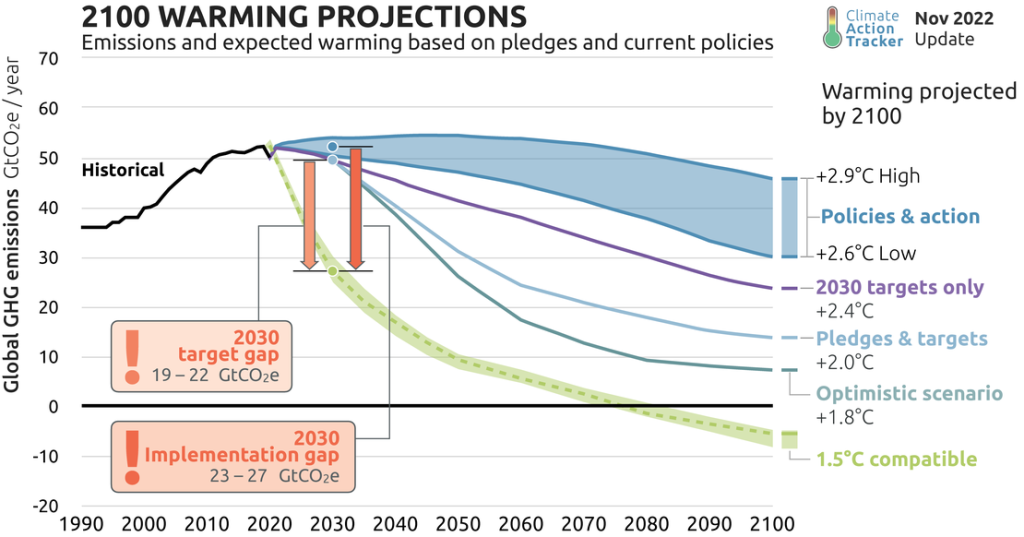
The broad blue band shows the projected temperature rise based on the emissions of CO2 as the forecast rates (the scale on the left is in Giga Tonnes per year). The sea rises that will result from melting ice will severely affect developing countries as well as low-lying developed nations and the changes to the climate will have effects on life for everyone: an increase in turbulent weather, flooding, high winds, dry summers and overly wet periods causes chaos and destruction that is hard to map into costs. Perhaps this explains why some countries find it so hard to justify doing more to slow this cycle.
While this is a truly global issue, it will only be resolved if individuals and government policies change. No individual citizen can dictate that their country reduces their emissions but the more of us that act in an energy efficient way, are aware of our effect on CO2 production and work to reduce it then it has a cumulative and measurable effect.