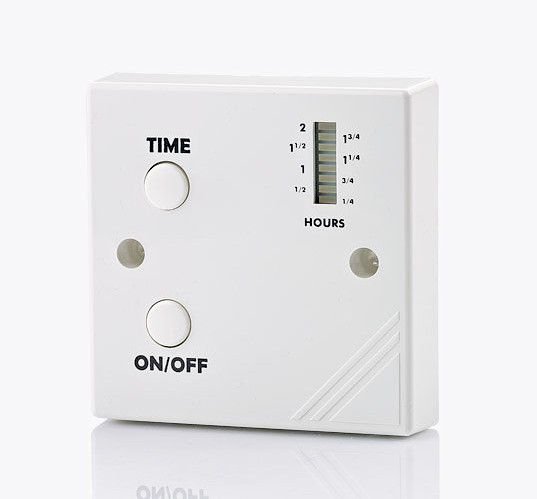
Immersion heaters are, without doubt, useful backups for gas-fired water heating systems: they are (usually) 3KW in power and boost the temperature of the top third of the hot water tank.
They’re wired via a switch – usually near the tank – so they can be turned on when required and, importantly, turned off again when they’ve done the job. Left on, they will automatically heat the water as soon as it drops below the set temperature so an unattended one can end up costing a lot of money to own.
Unfortunately, there’s rarely an indicator in an obvious place to help us remember to turn it off. There might be a glowing light next to the ‘on’ switch – but if the switch is in the airing cupboard then it’s not much use. What’s needed is either a switch that runs for a set time – adjustable for between 20 minutes and an hour – or a visible indicator that can be seen from the hallway.
We could relocate the immersion switch and put it on the outside of the airing cupboard wall or what have you – but it’s not a great look to have a semi-industrial switch half way up an otherwise unblemished wall! A neater solution would be better.
Timed switches
A timed switch is the ideal solution but ones that can handle a 3KW load are uncommon: CP Electronics do one called a High Output Runback Timer which is pretty much made for this job (the image at the top of this article shows one). It would be wired in series with the existing switch because that will most likely has a fuse in it and we need to keep that and could easily be mounted on the wall next to it. To use this, the original switch is left on and someone needing to turn the immersion on would simply press the timer’s button, safe in the knowledge that it’ll turn itself off automatically after the set time has elapsed. CP Electronics are the distributor; theses timers are available via CEF, amongst other outlets for about £35.
We’ve not fitted one of these ourselves but there doesn’t appear to be many alternative products that work as well in a domestic setting. While there are plenty of general purpose timed controllers that look like simple push buttons, they are designed for low-power things like stairwell lighting and simply won’t cope with the levels of current an immersion heater draws: they’d fail on first use.
Indicator light
The alternative is to wire a small indicator bulb in parallel with the immersion heater element and locate the lamp somewhere that’s more easily seen. While it won’t turn the heater off for you, it’ll help to remind you it’s switched on and so less likely to be forgotten.
A neat way of doing this would be to mount a small LED bulb somewhere suitable – the ceiling would work if required – and run the feed wires back to a small box that contains the circuit that regulates the power. This, in turn, is fed from the immersion side (‘load side’) of the existing switch. We could use a mains-powered bulb – a neon indicator for example – and do away with the low voltage conversion bit but most of those are designed to be installed in places where people can’t reach behind the bulb assembly. A low voltage LED is far safer.
The right temperature
To stop the immersion heater from trying to heat the water too much, set the thermostat on it so it clicks off just below the temperature that is set on the boiler. That way, if the immersion is ever left on, at least it’ll cut out when the boiler does!
One thing to note: while it’s a good idea to reduce the hot water temperature, don’t be tempted to go below 50oC to be sure you kill any bacteria that might try to form in the tank.
The right cable
If, for any reason, the cable to the immersion tank itself needs to be replaced, make sure the right grade of flex is used: a length of standard 13A cable is NOT suitable because it needs to be high temperature tolerant, usually sheathed in silicon rubber rather than the more normal PVC jacket.